Metal roofing is the main alternative to asphalt shingles on a house, and it has become a common sight on Upstate homes, from farmhouses and ranches to newer two-story builds. Bulldog Roofing Upstate installs metal roofs on homes in Anderson and across Anderson, Pickens, Oconee and Greenville counties, alongside shingle roofs.
The word covers more than one kind of roof. A standing seam roof, a screw-down panel roof and a metal shingle roof are all "metal roofs", but they look different, go on differently and behave differently over time. Knowing the differences is the first step toward deciding whether metal fits your house, and which kind.
The second step is the roof you already have. The condition of the decking, the pitch, the number of layers on the roof now, and details like chimneys and dormers all shape what a metal roof involves. A free inspection gives you that picture before you choose a material.
Types of Metal Roofing for Homes
Standing seam metal roofing
Standing seam roofs use long panels that run from the eave up to the ridge. Where two panels meet, their edges rise into a raised seam that is folded or snapped together, and the panels are held down by clips hidden under that seam. Because no screws go through the face of the panel, there are no exposed fasteners to work loose or leak. That clean, vertical-line look is what most people picture when they think of a modern metal roof on a house.
Exposed-fastener metal roofing panels
Exposed-fastener panels, often called screw-down or ribbed panels, are fastened straight through the face of the metal with screws that carry a rubber washer. They are common on barns, outbuildings and many homes. The panels themselves can last a long time, but the washers under the screw heads age in the sun, and metal moving with the heat can loosen screws over time. On this type of roof, the fasteners are the part that needs checking and replacing as the roof ages.
Metal shingles
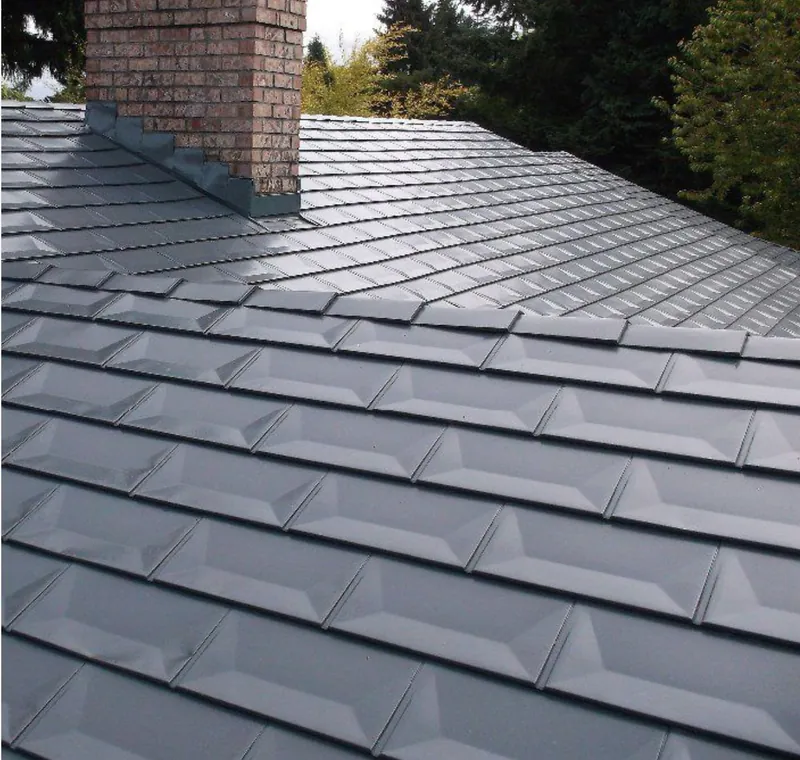
Metal shingles are smaller pieces of stamped metal that interlock, and they are made to look like asphalt shingles, slate, shakes or tile. They suit houses where a panel roof would look out of place, such as older homes or neighborhoods with a traditional look, and they handle the cut-up rooflines of dormers and valleys well. Up close they have more seams than a panel roof, so the way each piece locks to the next matters.
What people mean by a "tin roof"
Old roofs in the South were often called tin roofs, and the name stuck. Most residential metal roofing today is steel with a protective metallic coating and a painted finish, or aluminum. If your house already has an older metal roof, it may well be one of those earlier coated-steel roofs, and its condition at the seams and fasteners tells you whether it can be kept or needs replacing.
Metal Roofing or Shingles?
Neither material is right for every house. Architectural shingles usually cost less to put on and are simple to repair one piece at a time. A metal roof usually costs more up front but often lasts 40 years or more, which is longer than a shingle roof typically does. How long you plan to stay in the house is one of the biggest factors in which one makes more sense.
Looks matter too. Some houses wear a standing seam roof well and others look better in shingles or metal shingles. And the shape of the roof plays a part: long simple slopes suit panels, while a roof with many valleys, dormers and hips takes more cutting and trim with any metal system. If you are weighing both, our roof replacement page covers what goes into a new shingle roof, so you can compare them on the same terms.
What Goes Into a Metal Roof Installation
The deck and the old roof
A metal roof is only as good as the surface under it. On most re-roofs the old shingles come off so the decking can be checked and soft or rotted boards dealt with first. Some homeowners ask about putting metal straight over the existing shingles. Whether that is allowed depends on the local building code and on the condition of the deck, and the city or county building department is the place to confirm what applies to your address.
Underlayment
Underneath the metal goes an underlayment layer that serves as a second barrier against water. Metal gets hot in an Upstate summer, so the underlayment chosen for a metal roof needs to tolerate that heat.
Trim, flashing and penetrations
Much of the work on a metal roof is in the details: the trim along the eaves, rakes and ridge, the flashing where the roof meets a chimney or a wall, and the boots around vent pipes, which need to be made for metal. Those are the places a metal roof is most likely to leak if they are done poorly, so they deserve as much attention as the panels.
Expansion and ventilation
Metal grows and shrinks as it heats and cools through the day. Standing seam clips are designed to let panels move, and every system needs fastening that allows for it. The attic still needs airflow, in at the soffits and out at the ridge, just as it does under shingles.
What Drives the Cost of a Metal Roof
Metal roofing prices vary as much as the systems do, and any number worth trusting comes after someone has measured the roof. These are the things that move it:
- The type of metal roof. Standing seam, exposed-fastener panels and metal shingles are made and installed differently, and they are priced differently.
- Roof size and shape. Long, simple slopes go faster than roofs broken up by valleys, hips and dormers.
- Pitch. Steeper roofs take more safety setup and more time.
- What comes off first. Tearing off one or two layers of shingles, and replacing any soft decking found under them.
- Trim and flashing. Chimneys, skylights, walls and vents all need metal trim and flashing fitted around them.
- Metal and finish. Steel or aluminum, and the color and finish you choose.
Common Problems With Metal Roofs
Metal is a durable roof, but it has weak points like any other. On exposed-fastener roofs, aging washers and loose screws are the usual source of leaks. On any metal roof, poorly fitted flashing at chimneys, walls and pipes can let water in. Large hail can dent panels, especially softer metals, and a dented roof may still shed water fine while looking worse; our storm damage roof repair page covers what hail does to a roof. Scratches and cut edges that are not protected can rust over time. Standing seam panels can also show a slight waviness, called oil canning, which is cosmetic rather than a leak.
What to Expect From Bulldog Roofing Upstate
- Metal and shingle, side by side. We install both, so the comparison is about your house, not about what one company happens to sell.
- A look at the deck first. A free roof inspection shows what is under the current roof before you pick a material.
- Attention to the details. Trim, flashing and pipe boots get as much thought as the panels.
- Across Upstate SC. Metal roofing for homes from Anderson to Greenville, and out to Clemson, Seneca and Walhalla.
- Easy to start. Call (864) 702-2478 Monday to Friday, 8 AM to 7 PM, or ask about a metal roof online.