A roof inspection is a close look at every part of the roof that keeps water out: the shingles, the metal flashing, the boots around the vent pipes, the valleys, the vents and the edges. Bulldog Roofing Upstate offers roof inspections free of charge to homeowners in Anderson and across Upstate South Carolina. It is the first step on every job, and sometimes the answer is that the roof is fine.
Most roof trouble cannot be judged from the driveway. A lifted shingle, a cracked pipe boot or a gap in the flashing is easy to miss from the ground and easy to see from a ladder. So we start on the roof, and check inside and in the attic where there is a stain or access.
When the inspection is done, you hear what we found and what it means before anyone talks about price. Some roofs need a small fix. Some need watching. Some are near the end of their life. Either way, you get a clear picture, and nothing gets signed on inspection day.
What a Roof Inspection Covers
Every roof is a little different, but a thorough inspection works through the same list of places where shingle roofs tend to fail.
Shingles
The shingles are checked for curling, cracking, blistering and missing pieces, and for tabs that have come unsealed and lift in the wind. Granule loss matters too. Those gritty granules shield the asphalt from the sun, and bare patches age quickly. Hail leaves its own marks, which look like soft, dark bruises where the granules have been knocked away.
Flashing
Flashing is the metal that seals the joints between the roof and anything that interrupts it: chimneys, the side walls of dormers, skylights and the line where a lower roof meets a second story. It is one of the most common leak points on any roof. Inspectors look for lifted edges, rust, gaps and old sealant that has cracked or pulled away.
Pipe boots and roof vents
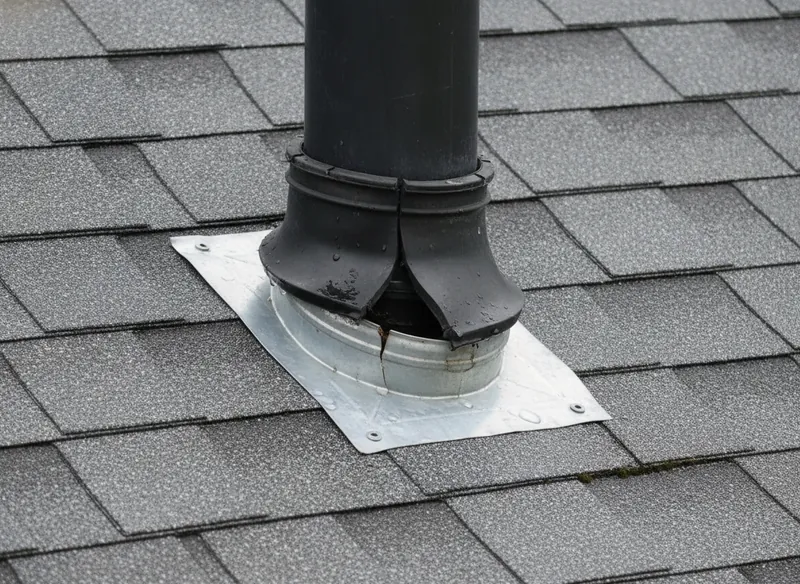
Plumbing vent pipes come through the roof inside rubber boots. Sun and heat crack the rubber over time, and once it splits, water runs straight down the pipe into the house. Boots are often the first part of a roof to fail. Exhaust vents and their seals get the same check.
Valleys
A valley is where two slopes of roof meet and drain together, so it carries more water than any other part of the roof. Worn shingles, debris piled up in the valley, or shingles cut too short along the center line all lead to leaks here.
Ventilation
The attic under a roof needs airflow. Air should come in low at the soffits and leave high at the ridge or roof vents. Blocked soffits or too little exhaust trap heat and moisture in the attic, which shortens the life of the shingles and the decking, and in an Upstate summer that heat builds fast.
Signs of decking trouble
The decking is the wood under the shingles. It cannot be seen from the roof surface, but it leaves clues: a sag between rafters, a wavy roofline, or a spot that feels soft underfoot. Those signs usually mean water has been getting to the wood for a while.
Drip edge and roof edge
Along the eaves and rakes, the drip edge should be in place and the shingles should overhang it far enough to throw water clear of the fascia rather than letting it run behind. A missing or bent drip edge, or shingles cut short at the edge, lets water wick back under the roof and rot the fascia and the first row of decking.
The attic, when it can be reached
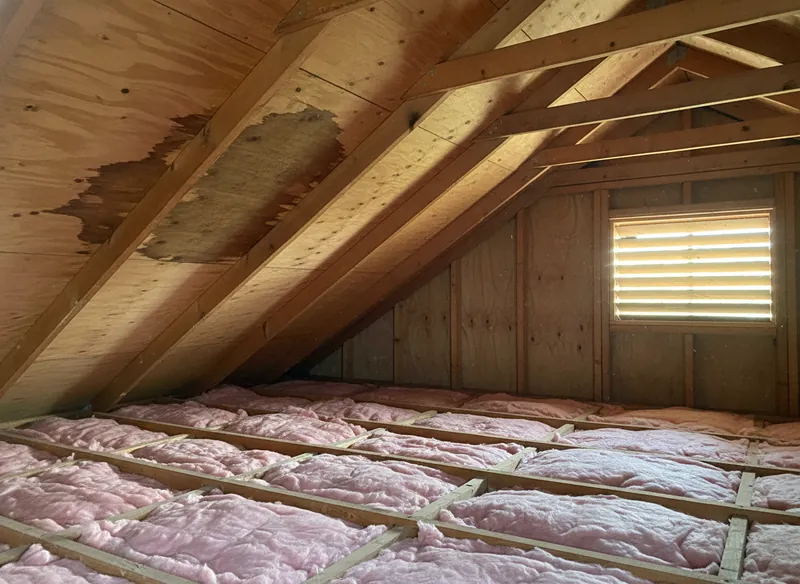
From inside, the roof tells a different part of the story. Water stains or dark streaks on the underside of the decking, damp or matted insulation, rusty nail tips, and daylight through the boards all show where water or air is getting in.
When to Get Your Roof Inspected
After a storm
Upstate spring and summer thunderstorms bring hail and strong wind, and both can damage shingles in ways that are hard to see from below. An inspection after a big storm tells you whether there is real damage worth raising with your insurance company, before you decide anything. Our page on storm damage roof repair covers what hail and wind do to a shingle roof.
When you spot a stain or a drip
A water stain on a ceiling rarely sits right under the hole. Water often runs along the decking or a rafter before it drips, so the source can be several feet away. Finding it means looking at the roof above, and our roof leak repair page explains how a leak gets traced back to where it starts.
As the roof gets older
Once a shingle roof has passed its first decade or so, a regular check catches small problems while they are still small. Pipe boots, sealant and flashing usually need attention well before the shingles do.
Before you buy, sell or replace
If you are selling or just bought, a free roof inspection tells you where the roof stands. It is not a home inspection. And before anyone talks you into a new roof, an inspection shows whether you need one yet.
What Happens After the Inspection
You get a plain explanation of what is on the roof and what, if anything, needs doing. Often that is a small job, like resealing flashing, replacing a cracked boot or putting back shingles the wind took. Those are covered on our roof repair page. If the roof has reached the point where repairs no longer make sense, we will say that and explain why. What you do next is up to you, and you can take your time deciding.
What You Get From a Bulldog Roofing Upstate Inspection
- No charge for the inspection. The visit and the explanation that follows cost you nothing.
- On the roof, not from the yard. Shingles, flashing, boots, valleys, vents and edges, checked up close.
- Small problems stay small. A cracked boot or a loose piece of flashing is treated as exactly that.
- Twelve towns, four counties. Inspections from Anderson to Greenville, and out to Clemson, Seneca and Walhalla.
- Simple to book. Call (864) 702-2478 Monday to Friday, 8 AM to 7 PM, or send the form on the contact page and we will call you back to set a time.