
Storm damage roof repair starts with knowing what the storm actually did. A hailstorm can bruise shingles without leaving anything you would spot from the yard, and a strong gust can break the seal on a row of shingles that still look flat afterward. Bulldog Roofing Upstate repairs hail and wind damage on shingle roofs for homeowners in Anderson and across Upstate South Carolina.
Several kinds of Upstate weather can damage a roof. Spring and summer thunderstorms can bring hail and sudden straight-line wind, wooded lots put big limbs over a lot of roofs, the remnants of tropical systems sometimes push heavy rain and gusts inland, and the odd winter ice storm loads up trees until branches give way. Any of those can leave a roof needing work.
Some damage is obvious: shingles lying in the yard, a limb on the roof, water coming through a ceiling. Much of it is not. The way to find out is to have someone get up there and check, slope by slope, before the next storm finds the weak spots for you.
What Storms Do to a Shingle Roof
Hail damage
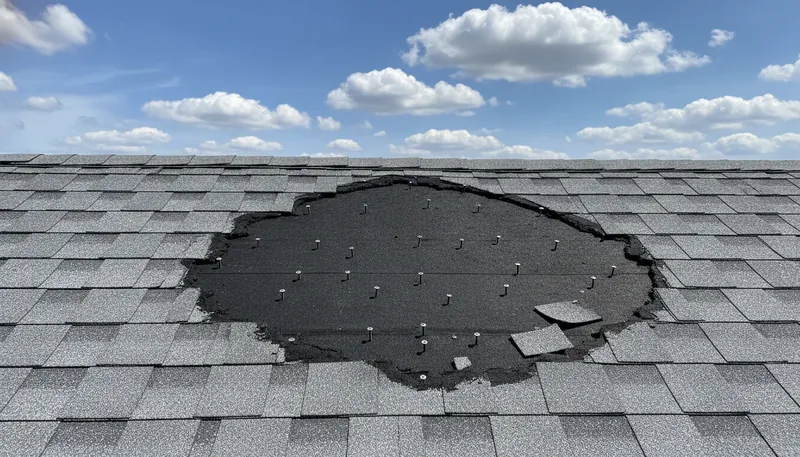
Hail hits a shingle and knocks the granules loose, leaving a dark spot that can feel soft, like a bruise on an apple. Bigger stones can crack the mat inside the shingle. The surface may still look fine from the ground, but a bruised shingle has lost part of the layer that protects it from the sun, and it tends to wear out early. Hail also dents soft metal, so dings in vents, flashing and drip edge are often the first clue that it hit the roof hard.
Wind damage
Shingles are held down by nails and by a strip of sealant that bonds each course to the one below. Strong wind lifts the edges and can break that bond. Sometimes the shingles tear off entirely and leave bare patches. Other times they crease at the nail line and settle back down, which looks normal from below but leaves a shingle that will lift again in the next storm. Ridges, rakes and corners take the most wind.
Fallen limbs and debris
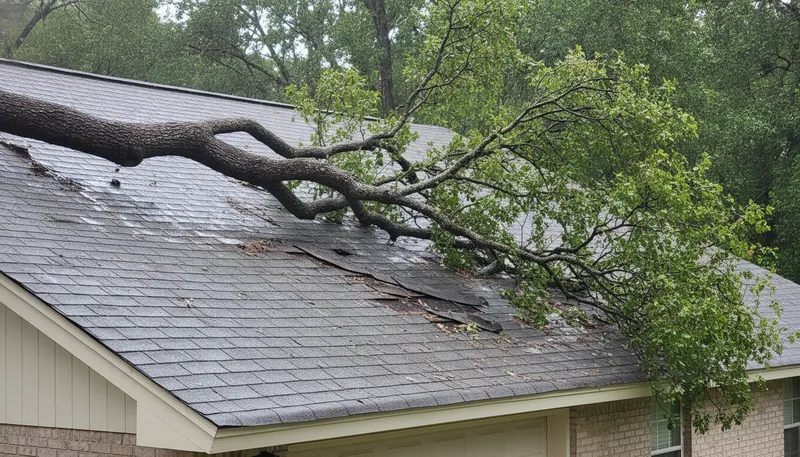
A falling limb can puncture the shingles and the decking under them, crack rafters, or tear flashing loose. Even a smaller branch dragged across the roof by wind can scrape away granules and break shingle edges. If a tree is resting on your roof, stay out from under that part of the house, and keep off the roof yourself.
Wind-driven rain
Heavy rain blown sideways can work under flashing and lifted shingles where ordinary rain never reaches. A leak that shows up during a storm and stops afterward is still a leak, and the water it lets in can soak the decking and insulation well before a stain appears on the ceiling.
After a Storm: What to Do First
- Stay safe. Keep away from downed power lines and anything resting on the house. Do not climb onto a wet or damaged roof.
- Look from the ground. Walk around the house and note missing shingles, debris on the roof, bent vents or drip edge, and shingle pieces in the yard.
- Check inside. Look at ceilings, the tops of walls and, if you can get there safely, the attic for fresh stains or drips.
- Protect your belongings. If water is coming in, move things out of the way and catch the drips.
- Get the roof inspected. Book a roof inspection so someone can check the shingles, flashing and vents up close.
After a big storm, door-to-door roofers are common. Take your time. Ask what they found, have it explained, and do not feel pressed to sign anything on the spot.
Storm Damage and Your Insurance Company
Homeowners often have insurance questions after a storm, so here is where we stand. Our job is the roof. Whether to file a claim is your decision, made with your insurance company. Going in, it helps to know whether the storm left damage that is worth calling them about, and that is what an inspection can tell you. We can explain what we saw on the roof and what it would take to fix it.
Repairing Storm Damage
Shingle and flashing repairs
Wind damage in one area is often a repair: replacing torn or creased shingles, resealing tabs that came loose, refastening flashing and swapping out dented or cracked vents and pipe boots. The aim is to make the repaired area shed water as well as the rest of the roof. On an older roof, an exact shingle color match may not exist anymore, which is worth talking through before work starts. Many of the same fixes are covered on our roof leak repair page, since storm damage and leaks so often arrive together.
When storm damage means a new roof
Hail that has bruised shingles across every slope, wind damage spread over much of the roof, or a limb strike that broke through the decking can be too much to patch sensibly. In those cases a roof replacement may be the better fix, especially on a roof that was already getting older before the storm. You will hear which way the roof points and why.
How We Handle a Storm-Damaged Roof
- A free look before anything else. Shingles, flashing, vents and edges checked up close, at no charge.
- Plain answers. What the storm did, what it did not do, and what the fix involves.
- Repair or replacement, whichever fits. The damage on the roof decides the scope of the work.
- Storm repairs in four counties. Homes in Anderson, Pickens, Oconee and Greenville counties, with Easley and Powdersville among the twelve towns we serve.
- One call. Reach us at (864) 702-2478, Monday to Friday, 8 AM to 7 PM.