
Roof leak repair comes down to one question: where is the water actually getting in? The brown ring on the ceiling, the drip by the light fixture or the damp spot on the wall is where the water finished its trip, not where it began. Bulldog Roofing Upstate traces leaks back to the point of entry and repairs that spot, for homes across Anderson, Pickens, Oconee and Greenville counties.
That matters because a leak fixed in the wrong place keeps leaking. Patch the shingles right above the stain and the next heavy rain can put a new ring on the freshly painted ceiling, because the real opening was six feet uphill next to a vent pipe the whole time.
Below you will find how water moves once it gets past the shingles, the places leaks most often start, what you can safely do inside the house until the roof is fixed, and how we go about finding the source.
How a Roof Leak Travels Before You See It
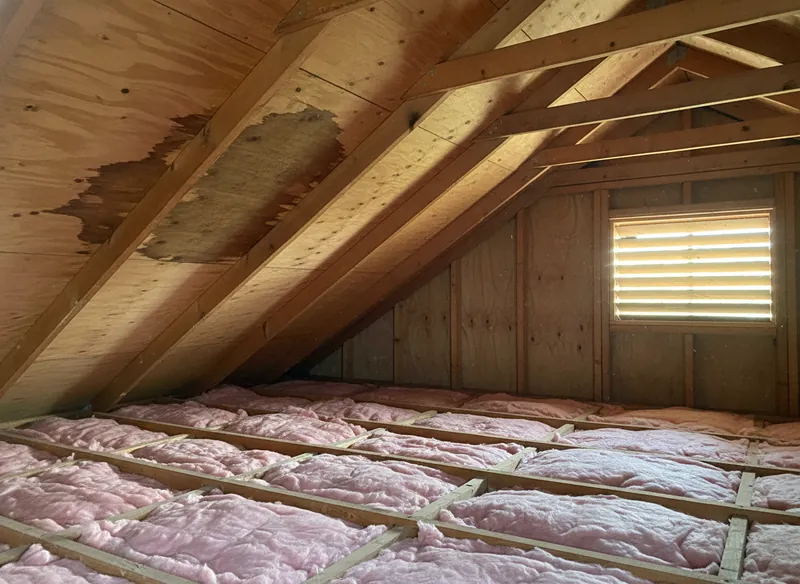
A shingle roof is built in layers. Under the shingles is a sheet of underlayment, and under that is the decking, the plywood or OSB panels nailed to the rafters. When water slips past the shingles, it does not drop straight down. It runs along the top of the underlayment, then along the decking, following the slope of the roof until it finds a seam, a nail or the edge of a rafter to drip from.
From there it can run down a rafter, soak along the top of the insulation, or follow a duct or a wire before it reaches drywall. By the time it shows up as a stain, it may have traveled several feet sideways and a good way down the slope from where it got in. On a low-slope section or a long run of rafters the distance can be even greater.
Timing tells you something too. A leak that shows up in every rain usually has a steady opening, like a split pipe boot. One that appears only when the wind blows hard from one direction often points to rain being pushed sideways under flashing or up under shingles at an edge. A stain that grows on cold mornings with no rain at all may not be a roof leak, which we come back to further down.
Where Roof Leaks Usually Start
Most leaks on a shingle roof start where the roof is interrupted: an opening, a joint or an edge. The open field of shingles is rarely the culprit unless something has torn or lifted them.
Chimneys and roof-to-wall joints
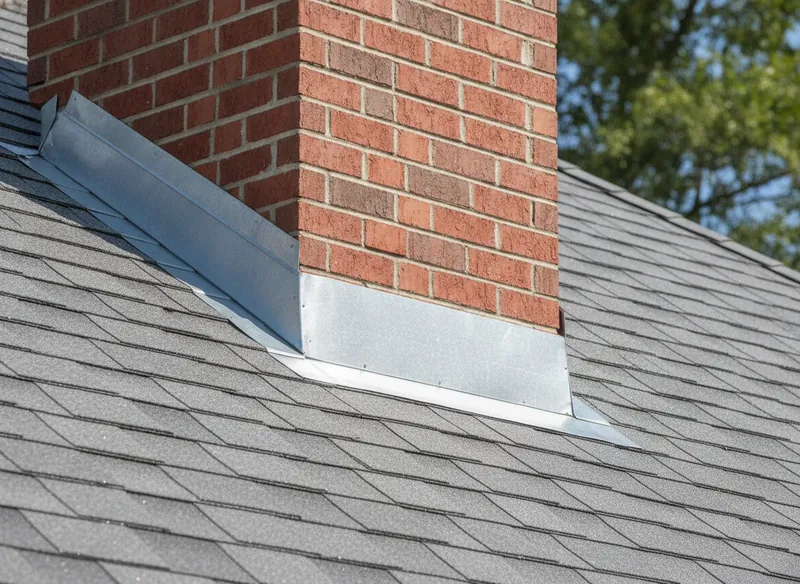
A chimney sits in the middle of a slope and catches all the water running down toward it. The metal flashing around its base has to keep that water out on all four sides, and the back side, facing uphill, takes the most. Dried sealant, loose counterflashing and crumbling mortar joints all give water a path inside. The same goes for any wall a roof runs into, such as the side of a dormer or a second story.
Vent pipes, exhaust fans and other penetrations
Plumbing vents, bathroom fan outlets and attic vents all pass through holes cut in the roof. Each one depends on a boot or flashing to stay sealed. The rubber collar on a plumbing vent boot is a common failure point, since sunlight dries it until it cracks and water then runs down the outside of the pipe.
Valleys, edges and wind-lifted shingles
Valleys carry water from two slopes and collect leaves that hold it there. Roof edges can let water back under the shingles if the drip edge is bent or missing. Shingles lifted by a storm, with the seal broken underneath, can let wind-driven rain straight under the course above. If a leak began right after a hard storm, our page on roof repair covers fixing torn and missing shingles in more detail.
Nail pops and exposed fasteners
A nail that was not driven flush, or one that has worked its way up as the decking swells and shrinks, can push up through the shingle above it. That leaves a small hole right over the nail, and water follows the nail shank down into the decking. These leaks are small, slow and easy to miss from the ground.
What to Do Until the Roof Is Fixed
The goal until the repair is to limit the damage inside and keep everyone safe. Please do not climb onto the roof yourself, especially in rain or while the shingles are wet. A wet roof is slippery, and that is a job for someone with the right ladder and footing. These steps are all indoors:
- Catch the water. Put a bucket or tub under the drip with a towel in the bottom to stop splashing, and move furniture, rugs and electronics out of the way.
- Keep water away from electricity. If water is dripping near a light fixture, ceiling fan or outlet, stay clear of it. If you can reach the breaker panel safely and from a dry spot, switch that circuit off.
- Watch for a sagging ceiling. If the drywall bulges or sags with trapped water, keep people and pets out of the room. Wet drywall is heavy and can come down all at once.
- Look in the attic if you can do it safely. With a flashlight, and stepping only on the framing, look for wet decking, damp insulation or drips. Pull back soaked insulation from the drywall so it can dry.
- Take your own notes. Jot down when it leaks, how heavy the rain was and which way the wind was blowing, and snap a few photos of the stain. That helps whoever traces the leak.
Why Finding the Source Matters
A leak that goes on for months does damage well before it stains the ceiling. Decking that stays wet softens and rots, and eventually shingles nailed into it stop holding. Insulation that soaks up water flattens and loses much of its ability to keep the house warm or cool. Wet wood and drywall in a humid Upstate summer are an invitation for mold.
That is why a dab of roofing cement on the nearest suspicious spot is not a fix. It may buy a dry week, but if the real entry point is somewhere else, the water keeps coming and the hidden damage keeps growing. Repairing the source, and replacing any decking that has gone soft around it, is what actually ends a leak.
How We Track Down a Leak
Like any inspection, it starts on the roof, and we check inside and in the attic where there is a stain or access. On a leak, the inside part carries a lot of weight. We look at where the water shows up and ask what you have seen about when it happens. If there is attic access, the underside of the decking above the stain often shows a water trail running uphill toward the likely entry point, and the openings, flashing and shingles in that line get the closest look on the roof.
Some leaks are obvious once you are standing over them. Others only show in a certain kind of rain and take more patience to pin down. Either way, you hear what we found and what the repair involves before you agree to anything. If the leak turns out to be one of several problems on an aging roof, a full roof inspection gives you the wider picture before you decide on a repair or something bigger.
We cover homes from Anderson and Williamston to Pendleton, Clemson and Seneca. Call (864) 702-2478 during business hours, Monday to Friday 8 AM to 7 PM, or request a leak inspection online and we will call you back.
What to Expect When You Call About a Leak
- Source first, stain second. The repair goes where the water gets in, not just where it comes out.
- Attic and roof both checked. Following the water trail from inside is often the fastest way to the real entry point.
- Hidden damage flagged. If the decking around the leak is soft, you hear about it before the repair, and the agreed scope says what gets replaced.
- A free inspection to start. Nothing to sign, and you know what is going on before any price is discussed.