A roof replacement means taking the old roof off down to the wood, fixing whatever is wrong with that wood, and building a new roof on top of it: underlayment, drip edge, flashing, vents and new asphalt shingles. Bulldog Roofing Upstate replaces shingle roofs for homeowners in Anderson and across Upstate South Carolina, from Greenville and Easley out to Seneca and Walhalla.
There are three common reasons to start thinking about a new roof. The roof is getting old and starting to look it. A leak keeps coming back no matter how many times it is patched. Or a storm has done enough damage that patching no longer makes sense. Any of those is a good reason to have the roof looked at, but none of them settles the question on its own. The right answer comes from what is actually up there.
That is why a replacement here starts with a free roof inspection. We look at the shingles, the flashing, the vents and the decking signs, and you hear plainly whether the roof needs replacing now, could use a repair to buy it more time, or is fine for a while yet.
Signs Your Roof Is Ready to Be Replaced
Age
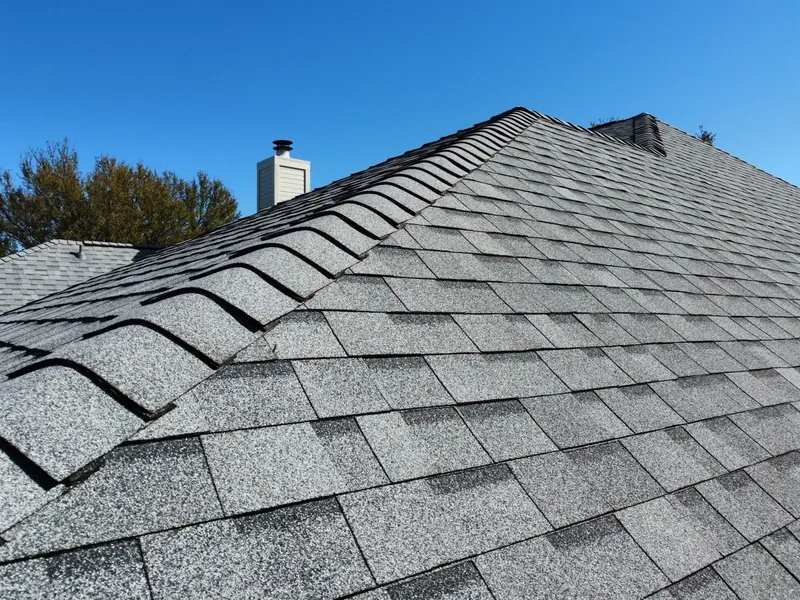
Asphalt shingles do not last forever. Older three-tab shingles often give out somewhere around the 15 to 20 year mark, and architectural shingles typically last longer, often in the 20 to 30 year range. Upstate summers shorten that. Long stretches of heat and strong sun dry out the asphalt, and the shingles on the south and west slopes usually wear first. If you do not know how old your roof is, the condition of the shingles tells most of the story.
Curling, cracking and lost granules
Shingles that cup at the edges, curl up at the corners or crack across the tabs have lost the flexibility that keeps them sealed down. Bald patches where the gritty granules have worn off leave the asphalt exposed to the sun, which speeds up the wear. Little piles of granules where the downspouts empty after a rain are another sign the surface is breaking down.
Leaks in more than one place
One leak at a pipe boot or a chimney is a repair. Leaks showing up in different rooms, or new ones appearing every time it storms, point to a roof that is failing as a whole rather than at a single spot.
Soft spots and sagging
The decking is the layer of plywood or OSB the shingles are nailed to. When water has been getting through for a while, that wood softens, delaminates or rots. A roofline that dips between rafters, or a spot that feels spongy underfoot, means the decking needs attention, and decking problems are hard to fix without taking the shingles off.
Signs in the attic
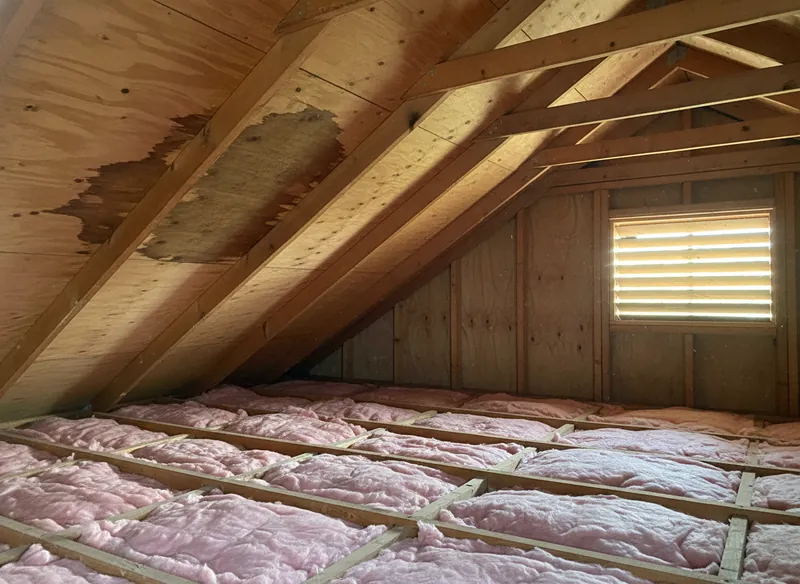
On a sunny day, daylight showing through the roof boards, dark water stains on the underside of the decking, or damp insulation all say water or light is getting in where it should not. So does a musty smell in an attic that should be dry.
What Goes Into a Shingle Roof Replacement
A new roof is a system, not just a fresh layer of shingles. Each part does a different job, and the roof is only as good as the weakest one.
Tear-off and a look at the decking
The old shingles and underlayment come off down to the decking. With the wood exposed, rotted or soft sheets can be found before anything new goes on top of them. Laying new shingles over damaged wood is how a new roof ends up with old problems. A tear-off is the time to check each run of boards, and the agreed scope says what gets replaced.
Underlayment and leak barrier
Underlayment goes over the bare decking as a second line of defense under the shingles. In the spots where water collects or runs hardest, such as valleys, eaves and around penetrations, a self-adhering leak barrier is commonly used because it seals around the nails driven through it.
Drip edge and flashing
Drip edge is the metal strip along the eaves and rakes. It carries water off the edge of the roof and away from the fascia boards so they do not rot. Flashing is the metal that seals the joints where the roof meets a chimney, a wall or a skylight. A replacement is the time to renew both, because reusing tired flashing under brand new shingles is a common source of leaks.
Pipe boots and ventilation
The rubber boots around plumbing vent pipes crack in the sun long before the shingles wear out, so a replacement is the natural time to swap them. Ventilation matters just as much. Air needs to come in low at the soffits and leave high at the ridge. A hot, poorly vented attic cooks the shingles from underneath and holds the humidity of an Upstate summer against the decking.
Architectural shingles
Most roofs going on homes today use architectural shingles, which are thicker and layered for a dimensional look and typically stand up to wind better than the older flat three-tab style. You choose the color. The style and the profile of your house help decide what looks right. If shingles are not what you want, metal roofing is the other material option for a new roof.
Cleanup
A tear-off sends a lot of old shingles and nails toward the ground. A proper job ends with the debris hauled away and the yard, beds and driveway checked for nails, so the first thing you see afterward is the roof, not a flat tire.
Repair or Replace: How the Decision Gets Made
A new roof is a big decision, and it should not be made on a hunch. Three things decide it: how old the roof is, what shape the decking is in, and how many separate problems there are. A younger roof with one bad area is usually a candidate for roof repair. A roof near the end of its life is different. Once the shingles are brittle everywhere, each patch fixes one spot while the next one starts, and paying for repair after repair can end up costing more than replacing the roof would have.
Some situations are not close calls. Widespread curling and granule loss, soft decking in several places, or two layers of shingles already on the roof usually point toward replacement. A sound roof with a single leak at a chimney or a vent usually does not.
What Affects the Cost of a Roof Replacement
Every roof is priced on its own, after someone has been up on it. These are the things that move the number:
- Size. Roofers measure roofs in squares, with one square equal to 100 square feet of roof surface.
- Pitch. A steep roof takes more time and more safety setup than a low-slope ranch roof.
- Layers. Two layers of old shingles take longer to strip and dispose of than one.
- Decking. How much wood needs replacing is not fully known until the old roof is off.
- Details. Chimneys, skylights, valleys, dormers and extra vents all add flashing and labor.
- Shingle line and access. The shingle you pick, and how easy it is to reach the roof and set up around the house.
What You Get From Bulldog Roofing Upstate
- The inspection comes first. You know what the roof needs before anyone puts a number in front of you.
- A straight answer on repair versus replacement. If the roof has life left in it, you will hear that.
- The whole roof talked through, not just the shingles. Decking, underlayment, drip edge, flashing, pipe boots and ventilation all come up before the work starts, and the agreed scope spells out what is included.
- Across Upstate SC. We cover twelve towns in Anderson, Pickens, Oconee and Greenville counties, from roof replacement in Anderson to homes around Greenville.
- Easy to reach. Call (864) 702-2478 Monday to Friday, 8 AM to 7 PM, or request your roof replacement inspection online.